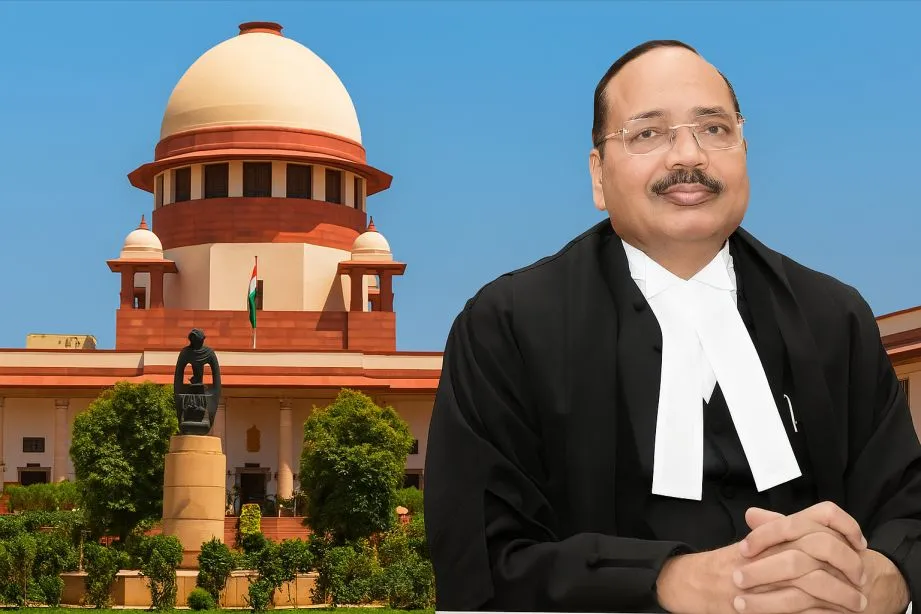
The Supreme Court has ruled that a court has no jurisdiction to direct an accused to surrender before the trial court at the same time as it rejects an anticipatory bail application. A bench of Justices JB Pardiwala and Ujjal Bhuyan made the observation while setting aside a Jharkhand High Court direction in a private complaint case involving allegations of cheating and forgery.

The Petitioner’s Path From the Magistrate to the Apex Court
The case arose from a private complaint filed before a magistrate in 2021 over a land dispute. The complainant invoked Sections 323, 420, 467, 468, 471 and 120B read with 34 of the Indian Penal Code, alleging voluntarily causing hurt, cheating, forgery of valuable security, forgery for the purpose of cheating, use of a forged document, and criminal conspiracy.
The petitioner, Om Prakash Chhawnika, approached the Jharkhand High Court for anticipatory bail. His first plea was rejected, and the High Court, relying on the framework laid down in Satender Kumar Antil v. CBI, directed him to surrender before the trial court and apply for regular bail. A second anticipatory bail application was dismissed on the ground that no new circumstances had been shown. It is that order which travelled to the Supreme Court.
What the Bench Said About Jurisdiction
The bench was emphatic that the High Court could decline anticipatory bail, but could not go further and compel surrender. “If the Court wants to reject the anticipatory bail, it may do so but the Court has no jurisdiction to say that the petitioner should now surrender” livelaw, the bench observed.
Justices Pardiwala and Bhuyan then walked through the procedure that ought to follow once a magistrate takes cognizance on a private complaint. The ordinary course, the bench said, is the issuance of summons; the accused is required only to appear and participate in the proceedings. A warrant may be issued in place of, or in addition to, summons only under Section 87 of the Code of Criminal Procedure, 1973 — and only where the court records reasons to believe that the accused has absconded, will not obey summons, or has failed to appear despite service without reasonable cause.
The bench was equally clear on the role of the police. In a complaint case, the Court said, the police have no power to arrest the accused unless the magistrate issues a non-bailable warrant. Even where a magistrate calls for a police report under Section 202 CrPC during an inquiry preceding the issuance of process, that does not authorise arrest.
A Pattern in Bihar and Jharkhand
Having stated the legal position, the bench turned to what it described as a recurring pattern. Anticipatory bail applications, the Court remarked, are being routinely filed and entertained in private complaint cases — particularly in Bihar and Jharkhand — when, on the procedural framework just outlined, no occasion for such applications arises in the first place. The result, the bench noted, is unnecessary litigation that ultimately reaches the Supreme Court.
The Court reminded the Jharkhand High Court that its direction asking the petitioner to surrender and seek regular bail was itself wholly without jurisdiction. The bench expressed concern that litigants are being put through avoidable rounds of proceedings up to the apex court because of directions that the procedural code does not contemplate.
Disposal and the Direction to Both High Courts
Since the trial in the underlying complaint was already in progress, the Supreme Court found no further orders necessary on the petitioner’s individual case and disposed of the petition. The order itself, however, was given a wider reach. The bench directed that a copy be forwarded to the Registrars General of the High Courts of Bihar and Jharkhand for placement before their respective Chief Justices. State counsel was also asked to examine the issue and advise the State accordingly.